
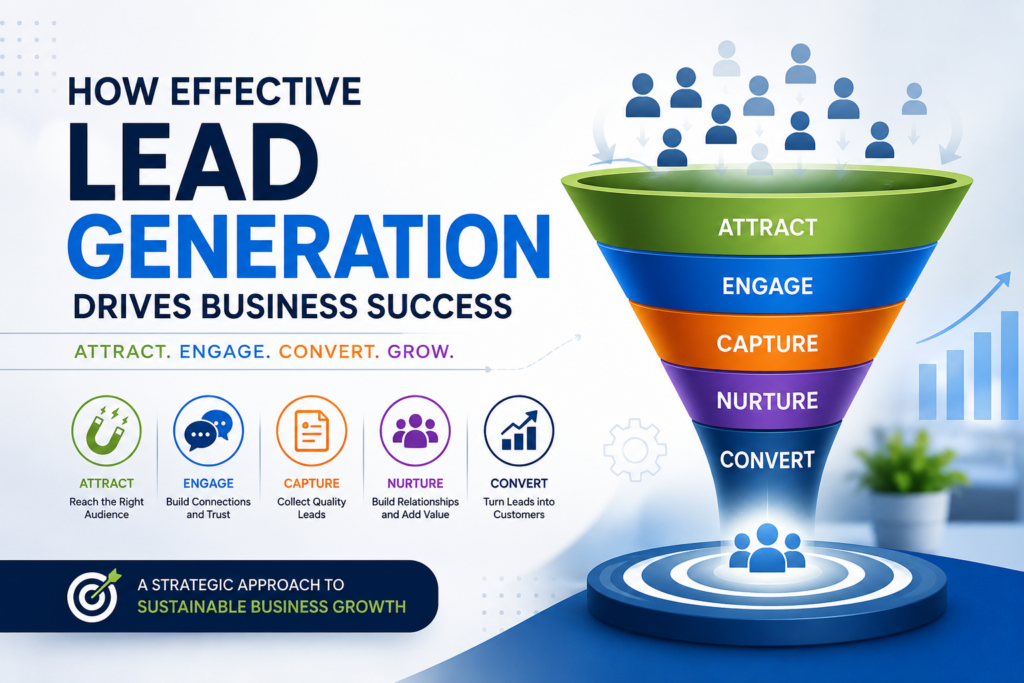
In an increasingly competitive marketplace, businesses need more than brand awareness to achieve sustainable growth—they need a consistent stream of qualified prospects. This is where lead generation plays a pivotal role. By identifying, attracting, and nurturing potential customers, lead generation creates opportunities that fuel sales, strengthen customer relationships, and drive long-term success.
Whether you’re a startup looking to build your customer base or an established company aiming to scale operations, a strong lead generation strategy can transform your growth trajectory.
Understanding Lead Generation
Lead generation is the process of attracting individuals or organizations that may be interested in your products or services and converting them into potential customers. A lead is someone who has expressed interest in your business through actions such as downloading content, subscribing to updates, requesting information, or engaging with your brand online.
The purpose of lead generation is not simply to increase website traffic but to identify prospects who have the potential to become loyal customers.
Why Businesses Need Lead Generation
The modern buyer conducts extensive research before making purchasing decisions. Businesses that fail to establish a strong digital presence risk losing potential customers to competitors.
An effective lead generation strategy helps businesses:
- Reach the right audience at the right time
- Build meaningful customer relationships
- Increase sales and revenue opportunities
- Reduce customer acquisition costs
- Improve marketing efficiency
- Generate predictable business growth
By consistently attracting qualified prospects, businesses can create a reliable sales pipeline that supports long-term objectives.
Key Channels for Lead Generation
Search Engine Optimization (SEO)
SEO remains one of the most powerful lead generation channels available today. By optimizing your website and content for relevant search terms, you can attract users actively seeking solutions related to your products or services.
Organic traffic generated through SEO often produces higher-quality leads because visitors already demonstrate purchase intent through their searches.
Content Marketing
Educational and informative content helps businesses establish credibility while addressing customer challenges. Blog posts, guides, whitepapers, videos, and case studies provide value to prospects and encourage them to engage further with your brand.
Quality content positions your business as a trusted resource and supports lead generation across multiple channels.
Social Media Engagement
Social media platforms offer direct access to target audiences. Consistent engagement, thought leadership, and targeted campaigns help businesses increase visibility and generate interest among potential customers.
When combined with compelling calls-to-action, social media can become a valuable source of qualified leads.
Email Marketing
Email marketing continues to deliver exceptional results for lead nurturing. Personalized messages, educational content, and targeted offers help guide prospects through the buyer journey while maintaining ongoing engagement.
Landing Pages and Conversion Optimization
Generating traffic is only the first step. Businesses must optimize landing pages to encourage visitors to take action. Clear messaging, compelling offers, simple forms, and strong calls-to-action can significantly improve conversion rates.
Common Lead Generation Challenges
Many organizations struggle with:
- Generating consistent lead volume
- Attracting qualified prospects
- Low website conversion rates
- Poor lead nurturing processes
- Misalignment between marketing and sales teams
Addressing these challenges requires a combination of data analysis, customer insights, and continuous optimization.
Best Practices for Better Results
To maximize lead generation performance:
- Define your ideal customer profile
- Create content that solves real problems
- Optimize your website for search engines
- Use marketing automation tools
- Develop personalized nurturing campaigns
- Track performance metrics regularly
- Test and improve conversion elements continuously
Small improvements across multiple touchpoints can lead to significant increases in lead quality and conversion rates.
The Role of Technology in Modern Lead Generation
Technology has revolutionized how businesses generate and manage leads. Customer relationship management (CRM) systems, artificial intelligence, marketing automation platforms, and analytics tools enable organizations to identify opportunities, personalize communications, and improve efficiency.
These technologies allow businesses to focus on building relationships while automating repetitive tasks and improving decision-making.
Conclusion
Lead generation is the engine that powers business growth. It enables organizations to attract the right audience, build trust, and create opportunities that ultimately lead to revenue. As digital competition continues to intensify, businesses that invest in strategic lead generation initiatives will be better positioned to capture market share and achieve sustainable success.
A well-executed lead generation strategy isn’t just a marketing tactic—it’s a long-term investment in your company’s future growth.